Monday, 22 February 2021

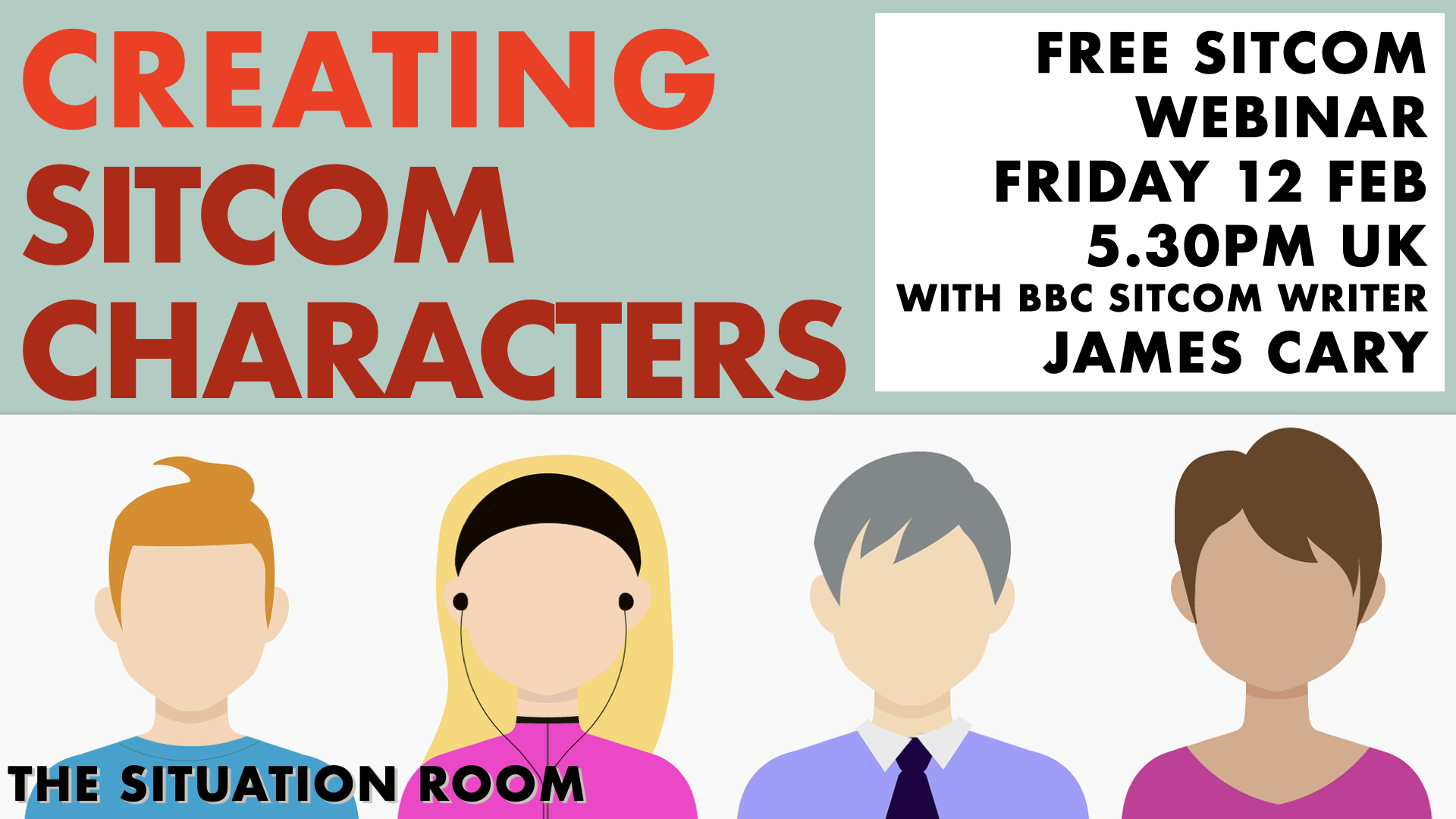
Sitcom Characters 101 What Do They Want?

Characters are not just the most important part of your sitcom. They are your sitcom. The word ‘sitcom’ is misleading. It is short for ‘situation comedy’ – and the situation might seem like the most obvious part of the show.

The situation is the most visually striking aspect. I’ve written a sitcom about soldiers in Afghanistan (Bluestone 42), about codebreakers in Bletchley Park (Hut 33) and about management consultants (Think The Unthinkable). But those shows are actually about Nick, Mary, Bird; Archie, Charles and Gordon; Ryan, Sophie, Daisy and Owen. These sitcoms are about the characters.

The setting of the show might initially be intriguing. But we’re not attracted to ideas and concepts half as much as we’re attracted to people. Any photographer will tell you that you have to get faces. You have to get the eyes. We want to connect.

We form a bond with the characters of the sitcom and we start to feel like we know them. When we watch Only Fools and Horses, we’re going on a journey with the eternal optimist, Del Boy who says ‘This time next year, we’ll be millionaires.’ It’s a show about survival and hope. It’s about a lot of things, but it’s embodied in the characters.

So that’s why I recommend taking a lot of time over your characters. They are fundamental.

And this may sound obvious but it really isn’t judging by the scripts that I read from writers who make some really big mistakes here. Let me just highlight a couple of main ones:

Mistake 1: 100% Banter

This is the mistake of a script which is just people talking and swapping jokes. It’s an easy mistake to make because we want to make the audience laugh – and this is why the first episode is the hardest to write. But you MUST show us who the characters are and why we’re going to enjoy spending time with them – otherwise it’s just going to be a string of jokes. And it’s going to wear a bit thin after a few pages.

We do want jokes. And when we’re starting a show, and we don’t know the characters, we have to work really hard to get laughs. A good example is the opening of Blackadder Goes Forth when we’re wondering what kind of Blackadder we’re going to get in this series. In the first scene we get some real gems like this:

Blackadder: That’s not the only thing around here that’s “very small indeed”.  Your brain for example, is so minute, Baldrick, that if a hungry cannibal cracked your head open there wouldn’t be enough inside to cover a small water-biscuit.

And:

George: (reading King and Country magazine) Come, come, sir, now. You can’t deny that this fine newspaper is good for the morale of the men.

Blackadder: Certainly not, I just think that more could be achieved by giving them some real toilet-paper. 

George: Not with you at all sir, what could any patriotic chap have against this magnificent mag?

Blackadder: Apart from his bottom?

And:

Blackadder: I smell something fishy, and I’m not talking about the contents of Baldrick’s apple crumble.

But the best sitcom jokes aren’t actually funny lines or wisecracks - even though those lines are memorable. They are this character saying these words to that character in that situation. Because we know the characters. That is the vast majority of sitcom jokes. Character jokes. So we need to know the characters. And so you, sitcom writer, need to know your characters.

Action Point: Get your characters to show us what they are like, where they are going and what they want.

Mistake #2 At The Mercy of Events

Quite often a script starts with characters talking, and joking. And then something happens. And the characters react. Then there might be more jokes. And then something else happens. There is more reaction. There are more jokes, if you're lucky. And then it ends.

That might initially sound fine. But it isn’t fine. Your character isn’t making any choices. They’re not active. They’re passive. And you can’t have a series of episodes of sitcoms where the protagonist isn’t doing anything, but having stuff done to them. It has to be compelling and dynamic.

Action point: Make Your Characters Active. Ask the question “What does your character want?”

I know that's basically the same point as the last action point. That's how important it is. It's the big question that will drive them through 100 episodes. What are they trying to achieve in any given day? What is their calling? We can nuance this with future posts, but for now, get them moving, active and doing stuff. What kind of stuff do they like to do?

What does Del Boy want? We hear the refrain throughout the show: "This time next year, we’ll be millionaires". It’s not in the first episode. But that spirit of optimism is there, and a whole lot else, like the integral relationship between two brothers. One is an optimist, the other a pessimist. But very quickly it gets nuanced.

In the first scene, during a disagreement between Rodney and Granddad about Sidney Poitiers, Del walks out and gets a laugh with the name ‘Harry Belfonte’.Then he goes and looks in the mirror and says to himself:

DEL

S’il vous plait, s’il vous plait, what an enigma. I get better looking every day.

He seems to mean it. He clearly believes in himself! Then he says:

DEL

I can’t wait for tomorrow.

Again, he means it. He’s not a down-trodden poor man. He’s a go-getter!

DEL

Oh, do you know, I think I’m suffering from something incurable.

Grandad and Rodney ignore him. Del is clearly a hypochondriac and his family ignore most of what he says. He goes on.

DEL

Still, never mind, eh! Oi, come on Rodney, shake leg, we’ve got a meeting at 12. [Great! Action! A quest!] What are you doing?

RODNEY

Our accounts.

DEL

You keeping accounts now? Well there you are Grandad, a lot of people told me I was a right dipstick to make my brother partner in the business, but this only goes to prove how bloody right they were. You dozy little twonk Rodney, this is prima-facie evidence ain’t it, eh? The tax man gets hold of that he’ll put us away for three years.

RODNEY

Don’t worry, if the tax man comes I’ll eat it. This is the only way I can keep a check on you, Del. I’m sure you’re cheating me in some way – I just can’t figure out how.

DEL

Cheating you! Cheating you! What’s that rumbling noise?

RODNEY

I didn’t hear anything.

DEL

No, it’s alright, it’s Mum turning in her grave.

Del knows how to play his little brother – and then we get a speech on how he essentially brought up his little brother himself. They’ve got a meeting at twelve to get us moving, there’s a chat about the business and Del’s philosophy about staying out of the governments way – both with tax and benefits – and we’re off! Great start.

In that first episode of Blackadder Goes Forth, the arrival of a service revolver means there’s going to be another ‘big push’, which means certain death. When Blackadder sees his chance to get our of the trenches by pretending to have talent as an artist, he grabs it. And when it turns out the George can paint extremely well, he makes the most of that. And then it all backfires.

Looking at Del and Blackadder, it’s not hard to see what they are trying to achieve: survival, in their own way and in their own contexts. We’ll think a bit more about that next time.


There’s a lot to think about so I ran a live Webinar on exactly this. You can watch a recording of that 80min session including Q&A for FREE by signing up to the The Situation Room.


Wednesday, 3 February 2021

Creating Even Better Sitcom Characters

Recently, I wrote about how a sitcom character isn’t a random bag of attributes and attitudes, rolled up with dice like a characters in Dungeons and Dragons.

It’s easy to think you’ve got a sitcom character when you haven’t really. You only know what they like to do and want they to do. Initially that might sound like enough. But it isn’t.

You need to be creating characters that will run for multiple seasons so the way you set them up is crucial. And that's what producers and readers are looking for in scripts. Not jokes. They're not actually that hard. It's characters who can run and run.

Our Friend Jessica

Last time, we looked at a lady called Jessica. She likes cooking. She’s forever foraging for ingredients and testing recipes on her husband who is a bit dubious them.

Initially it feels like there are a lot of plots and stories around cooking. She offers to cook for her neighbour who is sick. There’s a village fete and she wants to win the baking competition. A particular berry is in season and she needs to be out into the muddy fields to get the pick of the crop.

But why? Why is Jessica doing these things?

We need to know why Jessica is really doing these things because it needs to matter when she fails. And she is going to fail. It needs to hurt.

Wanting to cook isn’t quest. Wanting to be a cook or a chef isn't either. What Jessica needs is a sacred quest or calling that is going to be at heart of everything she does for dozens of episodes.

So how about this for our Jessica?

Jessica actually loves nature. She wants to be in tune with it, and the seasons. And the way she expresses that isn’t through political activism, biological research or pets – but seasonal wholesome home cooking. And she wants that food to taste really good, because she wants them to love nature too, in the same way that she does. Essentially, she doesn’t love cooking. She loves nature.

That’s better than what we had. But it still doesn’t quite feel right yet. We’ll come back to her in a moment.

Self-Awareness

Sitcom characters lack self-awareness. They think they want one thing, but actually they want or need another. They are fools. They think happiness or contentment can be found one way, but quite often that’s the thing that makes them miserable, or frustrated. They end up trying to please the implacable, or achieve the impossible.

The audience and the other characters have different perspectives on that character although the other characters in the sitcom will often misinterpret each other’s actions and motivations, but we’ll get to that in the webinar. (see below)

Such Is Life

This way of approaching sitcom characters sounds like a trick. But it isn’t. Comedy is based on truth. (I talk about that The Sacred Art of Joking) But this lack of self-awareness and state of delusion is life. We convince ourselves of all kinds of lies to get through the day. We run around in ever decreasing circles trying to solve problems that won’t actually help, trying to please people we don’t like or achieve goals that, if we stopped to think about for a while, we have no real desire to achieve.

It often takes people therapy, counselling or a traumatic event to really figure out what they want in life and how they’ve been going about it completely the wrong way. You’re characters probably aren’t in therapy. They're in denial. Like most of us. They’re living their lives, trying and failing and driving each other crazy.

Jessica 2.0

With this in mind, let's get back to Jessica. How about this?

Jessica cooks. But she doesn’t understand why. She thinks it’s because she’s good at it and that it brings her pleasure. She is quite good at it. Actually finds cooking frustrating because she has high standards. But why does she put herself through this?

Jessica does love nature, as we've said. And she loves living in the countryside. But she feels like a fraud. Because she’s a townie. Or thinks she is. She lived in the city for years but moved to the countryside a few years. She’s not the cliched city slicker who’s moved to a farm and found all the locals backward or hostile. (I am so bored of that trope)

In fact, everyone’s been very nice and welcoming to Jessica and she’s part of the community. But she still feels like an outsider. To prove that she fits in, she tries to show that she understands nature, and the ways of the countryside. And so to do that – in her head – is by cooking seasonal recipes, making jam and pickle and giving out jars it and winning the occasional rosette that the village fete. (But not too often or that looks bad).

Jessica is a nature lover, but that’s a passion. But she, like most people, wants to be liked, respected and accepted. We can all relate to that, even if we don't feel it. And cooking is how she expresses that need to be accepted.

So that’s Jessica.

But what about her husband? Her mother? And her brother-in-law? What are they like and how do that relate?

We don’t just need to do apply this process to one character but to a family of characters – but we don’t do that in isolation.

There’s a lot to think about so I ran a live Webinar on exactly this. You can watch a recording of that 80min session including Q&A for FREE by signing up the The Situation Room.

Friday, 22 January 2021

Characters, Stories and Entangled Souls

In the last post, I looked at characters. And we'll get back to that very soon, but I'd like to look at something that's been bothering me and, when I think about it, it comes down to story and character.

I watched some movies over Christmas and New Year. The first is Pixar's latest, Soul. It's on the Disney+ App and by now you might have gotten around to watching it. There will be spoilers. But, as I explain, there are very few spoilers to spoil.

Being a comedy writer who loves jazz piano and theology, I was really looking forward to Soul, a comedy about a jazz pianist going into the afterlife.

I was chronically disappointed and I've been thinking hard about why.

I was concerned that my expectations were too high, and that I was just being hyper critical or jaded. But then I watched It’s a Wonderful Life on New Year’s Day, which remains a masterpiece (albeit fifteen minutes too long, if we’re honest). It covers similar subject matter to Soul, and is a much better use of your viewing time. (Not that that is limited in these times of lockdown)

The day after, I watched Tangled for the first time. Tangled is a truly brilliant movie, a classic fairy tale retold in a way that seems fresh, funny and full of action. The storytelling is masterful (except for that bit where her tear lands on him at the end. That was proper cheating. Naughty).

These three movies reminded me how critical good storytelling is.

In this regard, unusually for Pixar, Soul is real clunker.

What We Expect From Pixar's Pete

Pixar, to be fair to them, have raised the bar ludicrously high when it comes to storytelling. Dave Cohen and I have even done Sitcom Geeks podcasts about their 22 Rules of Storytelling. They've rewritten the rules and raised the bar really hard. So criticising Pixar here seems a bit like having a go at Paul McCartney for Wings, an extremely successful band with some gigantic hits, that only suffer by comparison to the platinum standard set by McCartney himself with the Beatles.

And let's face it. Pete Docter has nothing to prove. He has writing credits on Inside Out, Up, Wall-E, Monsters Inc and Toy Story 2. I watched Wall-E for the first time last year, and speculated if I wrote anything that good, I'd retire because I'm never getting close to that again. It's brilliant. Really really good. Big yet subtle, and it's about robots and yet utterly humane.

That said, Wall-E still not as good as Toy Story 2. In which Pete Docter also had a hand. That movie is perfect.

So Pete Docter knows stories. I am not worthy even to sharpen his pencils. I get it.

But somehow this Soul story slipped through the net. Maybe because he’s very very senior in Pixar now so who’s going to take him to one side and tell him that the storytelling on Soul isn’t up to his usual standards?

Getting In The Provisos

Let’s do the other provisos now, shall we? Maybe you agreed with almost all the critics who thought that the movie was enchanting, delightful and transcendent. If you liked it, that’s fine. It’s possible to like bad movies that don’t really work. In my YouTube series about script problems, I cover some major flaws that could be contained in the first ten pages of your sitcom script. But if the reader or viewer just connects with the material or the character for whatever reason, some fairly major flaws can be overlooked or don’t seem to matter.

I was reminded of this when I rewatched The Italian Job with my kids, also over Christmas. I love so much about that movie. In fact, I will go as far as saying that I love that movie.

But The Italian Job doesn’t work. And I only noticed this on this latest viewing. Charlie (Michael Caine) is released from prison, and handed all the info for a heist in Turin. And he executes it, with a mess up at the end that’s just annoying, but doesn’t fundamentally mean anything. Why does Charlie want to pull off this job? We don’t know. What’s he trying to prove? To whom? No idea.

(Correction: See comment below which is a good point. And I was wrong, but I'm going to let my idiocy stand here. But all I'd say is there appears to be very little personal connection with the guy who dies. And once the job gets going, this motivation completely falls away. When it goes wrong, there's no sense of letting this guy down. The fact I can't remember his name is telling.)

This is a problem. As we established in the last post, your character is not a name, a suit and a situation. He's not even defined by what he or she does. A career criminal is not a character. Why commit crimes? Does he want glamour? Does he think the rich don't deserve it? Is he just trying to feed his family or pay medical bills (eg. Breaking Bad)? Why is Tony Soprano a criminal? In fact, he's having an existential crisis about that in the series.

But you couldn't make a sitcom series about The Italian Job. It's all icing and no cake. It's missing an Act 1 and Act 3. It’s essentially Michael Caine sporadically shouting at people, and minis driving around to a brilliant soundtrack.

This is a roundabout way of saying you can like Soul. And I can tell you why it doesn’t really work. Or how it could have been better. And, even though I don't know you, we can still be friends. And you don’t need to be sad I didn’t like the thing you liked. Deal?

Why Soul Doesn't Work For Me

If you didn’t know who Pete Docter was, and you were reading the script from a big pile, you’d probably stop reading at page 10. It’s not a strong opening. We have an uninspired music teacher, Joe, being offered a full time job, and he’s not happy about it. And slightly resents the children. But he’s not grumpy. But he’s not exactly Robin Williams in Dead Poets Society. He’s not exactly… anything. 

Joe goes to see his mum and it’s clear that he’s never made it as a musician. But why? Bad luck? Maternal pressure? What is it about him and his character that has held him back? There doesn’t seem to be a reason. It looks like he’s just been unlucky.

But then his luck changes. Okay, you can have a piece of luck at the start of the movie. And he is then very very lucky dodging things that might harm him, until his luck runs out. And he dies.

Then he finds himself on a conveyor belt heading towards a great light and here we get even more questions. I’ve made my peace with the uber-bland post-religious afterlife stuff. I presume they were trying not to offend anyone, because the movie’s not about that. Fine. But you’re then left with how you depict characters who are archangelic or metaphysical in some way. I wasn’t convinced. But that wasn’t my issue. I had many many more.

Fine About Dying

For starters, everyone on that conveyor belt seemed fine about dying. And Joe didn’t. And Joe seemed odd for ‘having stuff to get back to’. Don’t we all? The lack of realism around that incident was just bizarre. And somehow, he was the only person in the history of infinity who jumped off the conveyor belt. Seriously? What makes Joe so special that he manages something that we’re given to understand no-one else has ever done before? And when he does manage it, the angelic beings don’t seem to know much about it. It was very weird.

And then we just get the constant explanation of rules, quests, astral planes and all kinds of ethereal business.

It. Just. So. Expositional.

All. The Time. 

What happens now? This. Why? Because of this. Then what? This. Why? Here's why. etc.

And then we get another unearned twist of fate. Joe gets to go back to earth! Except there’s a mix up and a body swap. But this sheer dumb luck, rather than based around story and character. You really shouldn’t be doing that (again) half way through the movie.

Then we have series of incidents where Joe wanders around with his cat and it all plays out exactly as you would expect. And when he gets his moment, it's an anti-climax. Like we new it would be. So what's his purpose now?

I don't really know what his purpose was to begin with. He wanted to be a professional jazz pianist because... he loved the music? He wanted to be like his dad? He didn't want to teach kids? I don't know.

Back to Rapunzel

Contrast this with Tangled. At the end of the second act, there was a brilliant low point. Rapunzel felt she had been betrayed, the man appeared to be sailing away, and she was going back to the arms of the woman she thinks is her mother. I had no idea how our heroes were going to get out of their pickle and how things would turn out.

No surprises like that in Soul at all. And there were some slightly confusing life lessons that your passions aren’t your purpose or something? Take a moment to smell the roses. Okay.

And then, at the very last moment, the eternal beings make an exception for Joe (even though no-one else has ever deserved this before) in a final resolution that was utterly predictable and infuriating in equal measure.

As you can tell, I didn’t like it.

And if you didn’t like it, maybe I’ve shown you why.

The moral of the story here is that the story is so important. Pixar get this right time after time. And we can learn so much from their movies. And here we learn, for once, how not to do it.

Wait, isn’t this a blog about Sitcoms?

Yes. This has everything to do with sitcoms. Sitcoms are stories.

Yes, there are characters. That’s why people come back again and again. There are jokes that get the laughs. Really good jokes can last for years and give people pleasure for decades. There are situations, poignant moments and tears as well as laughter that make a show or episode truly memorable. All of this happens in a story. It’s the chassis of the car on which you bolt the engine, electrics and bodywork.

Reading around the movie, it sounds like Pete Docter wanted to tell a story about souls before they are born. Which he does. Eventually. Having someone die and go to the afterlife - and then into the before-life feels like setting up a story you're not actually telling.

Getting the story right takes waaaaaay longer than most people think. When a script isn’t working, it’s usually the story that’s the problem.

And if the story isn't fixable, it's normally because the character is the problem. I think our hero, Joe, is not quite set up right as a character.

Rookie Mistake

In the case of spec scripts, the writer has normally started writing the script too early, and hoped that the story issues will sort themselves out. They very rarely do. They might well have started out with the wrong story altogether. Unless you’re some kind of genius, good sitcom stories are carefully chosen and scripts are planned and plotted so that every line, action and scene tips us into the next. That way, we have a chance of ending up with a script that is greater than the sum total of the parts. The scripts still needs soul, for sure, but it needs so much more.

Fixing Your Stories and Characters

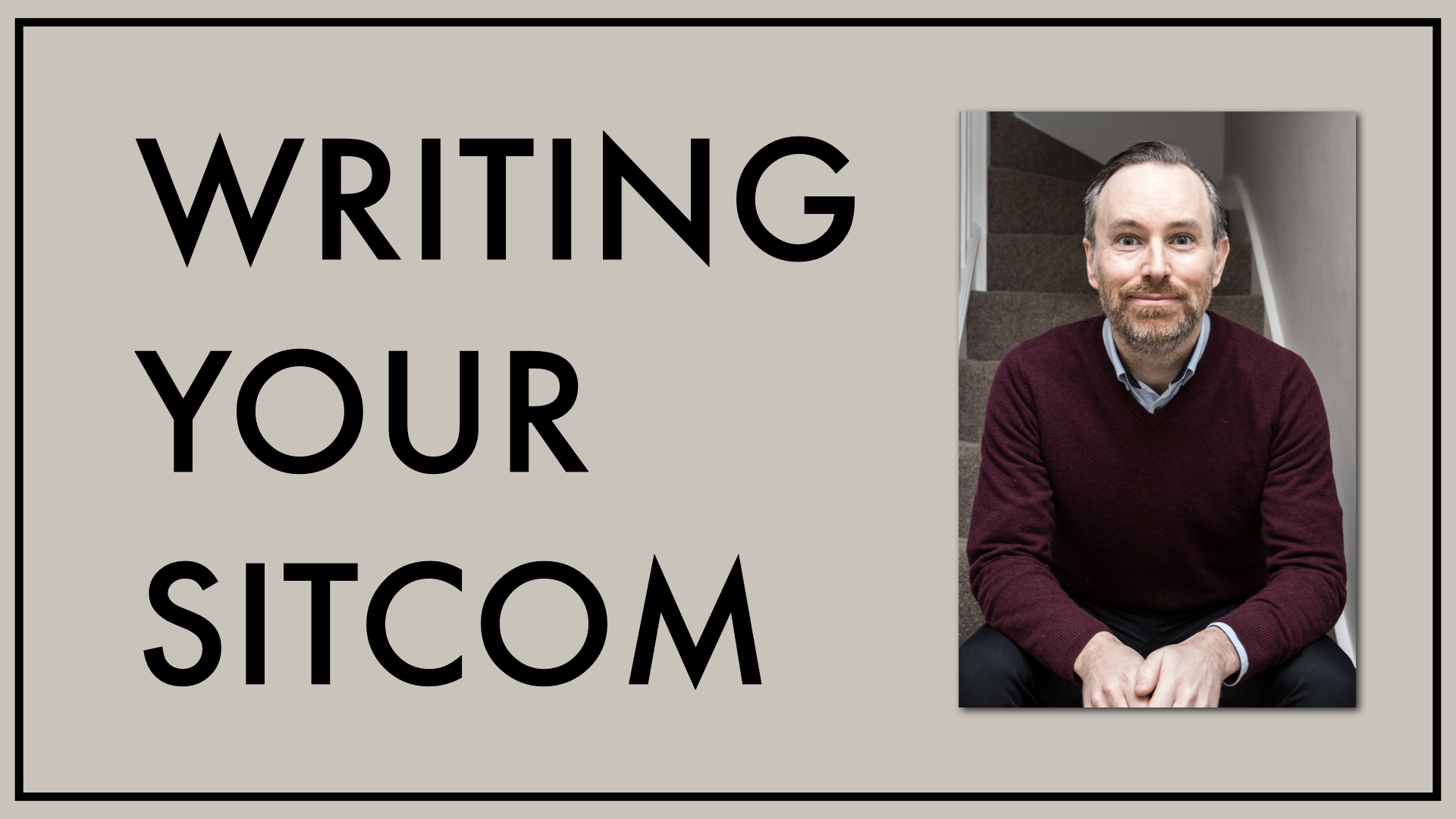
That’s what I’m covering in my new sitcom video course, Writing Your Sitcom. We go right back to the beginning and think about characters and stories and how they can work together rather than fight each other. In fact, we learn about the characters through thinking about stories. So if you’re sick of trying to fix a story and some characters that just aren’t working, or the jokes aren’t coming, or the script is going nowhere, maybe it’s time to start over. In fact, it will probably save time in the long run, and get you to that script you can be proud of months earlier. Why not find out more on this video below?


Wednesday, 20 January 2021

Creating Better Sitcom Characters

Years ago, I used to play Dungeons and Dragons.

Wait. Don’t go. Come back! I want to tell you about creating sitcom characters!

It’s a fairly open-ended kind of game which involves creating characters. I forget the details, but I think you pick a character type (eg. Warrior, Wizard, Bard etc) and some kind of outlook on life (eg. Lawful Good; Chaotic Neutral), and then rolled dice for six character attributes and then another dice for their ‘hit points’. You then had ‘a character’.

Creating characters this way is not a bad start for a game where you’re mostly hacking goblins to bits. And where your character's life plan is to hack goblins to bits. And find treasure.

But this approach is really not enough for sitcoms.

Describe Your Characters

What characters do you have in your sitcom?

Even if you've only just thought of a location or situation, you'll start to fill it our with characters almost immediately. So who are your characters?

You might instinctively describe them based on their age, gender and job title or situation. It’s easy to describe characters based on how they look, what they do or even what they say. But telling us what they are like is not enough.

No way near enough.

What's the Story?

I've been writing and podcasting a lot recently about the importance of story in sitcoms. This is much overlooked. Very very rarely indeed do I read a script in which the story of the script actually works well. Normally, a good script, a script that will do quite well in a competition, is some funny characters, an interesting situation, a refreshing attitude and some jokes. The big let down is always the story, which normally lacks a beginning, or if it has a beginning, there is no clear end point. And if it has a beginning and end, it lacks a muddle in the middle.

So, spend more time on the story, right? Right. And that's what I spend a lot of time on in my video course, Writing Your Sitcom.

BUT.

You can't get the story right without getting the characters right. You can't tell a decent story about a sitcom character if you don't know who they really are, and what they really want. Knowing what the character is like is not enough.

Digging Deeper

I’ve said previously that sitcoms are a marathon, not a sprint. You need a character that will have a motivation that will carry them through 30-180 episodes. Even 12 is quite a lot of stories. And each week, they have a mini-quest. But those mini-quests are not a series of incidents, or impulses or whims. Those are easy. Your character wants to lose weight, make more money, dump their girlfriend, learn to drive, take up Morris Dancing or run for Mayor.

But why?

Why would they want to do those things?

Why do they want to do anything? The sitcom 'story of the week' has to be an expression of their life goal and their bigger story.

So the key question is this:

What does your character want?

This means asking further questions like: What is she trying to achieve? What gets her out of bed in the morning, keeps her up at night and drives her loved ones to distraction? There needs to be a unifying theme to these things. This is about life goals.

Everybody loves Jessica
Let's take the example of Jessica.

She's young. She's energetic. She's positive. And she loves to cook. In fact, she's obsessed with cooking. She's always cooking. She loves food, she loves ingredients. She loves going to farmers markets to get the best, most natural ingredients. Her fridge is always full of things to cook. And her freezer is full of things she has cooked. Does that sound like a sitcom character?

Nope. Not yet.

What Does Jessica Want?

I just said. She wants to cook.

But that's not enough. I can't write that character yet. But we could easily be fooled into thinking we can start plotting Jessica stories. After all, there’s lots of specificity there and we might get to work on the Jessica show thinking that all is well.

Is this Jessica?
There are some easy stories right there:

Jessica throws a dinner party.

Jessica goes to the farmers market.

Jessica needs a bigger fridge.

Jessica finds thing in the freezer and doesn’t know what it is.

Jessica gives someone food poisoning.

Jessica’s pressure cooker explodes.

But these aren’t stories, or even plots. They are events.

Why are they happening? Why is Jessica doing them? Why is she doing it this way and not that way? What does it matter to Jessica or anyone if she fails? Why is the exploding pressure cooker a disaster? Why not just buy another one?

Who is Jessica and why does she love to cook? I’ve no idea.

Yet.

Too Many Cooks

This is not Jessica.

Look around at TV chefs and they all have a different angle. Think about the contrasting philosophies behind the cooking of Jamie Oliver, Nigella Lawson, Hugh Fearnley-Whittingstall, Mary Berry, Gordon Ramsay, Pru Leith, Delia Smith, Heston Blumenthal and Nigel Slater. Why do they all cook?

For Jamie Oliver, food is about togetherness and family.

For Gordon Ramsay, it’s about excellence and professionalism - and making money.

For Hugh Fearnley-Whittingstall, it’s about the seasons and the bounty of Mother Nature.

For Heston Blumenthal it’s about innovation and experimentation.

These reasons to cook are all worlds apart from each other. In fact, they're barely even about cooking. There’s room for this glut of cooks and TV chefs and food writers because they all have different philosophies. They connect with completely different audiences who are looking for different things. It’s all related to cooking. But it’s not about cooking.

Choose Your Jessicas

What about your Jessica? Why does she cook?

This Jessica cooks because she has a polytunnel

Does Jessica want to be a celebrity chef because she wants to be famous?

So she’s making her food look amazing and is struggling to build her Instagram profile. She wants to get onto bake off to give her a platform for her persona. She's already picking out what she'll wear each week. That's one Jessica.

Does Jessica want to cook food from scratch from natural ingredients because she is trying to protect her family from chemicals and poisons?

So she’s sourcing ingredients from all over the country and the world, and receiving shipments from plantations in Sri Lanka and Ecuador, often in comically large bulky amounts. But she has to make the food taste good because otherwise they'll tease her for her paranoia. That's another Jessica.

Does Jessica want to create perfect meals because she has low-self-esteem and this is how she thinks she can win approval and acceptance?

So she’s slaving away over a hot stove, throwing away bake after bake until she reaches perfection that will win the affection of her husband, or would-be husband, or judgmental mother or sister? (Again, pick one - either a picky husband or a nightmare mother)

Does Jessica use food to express superiority because she’s a snob?

So she cooks rare ingredients to perfection and serve them to influential people and her enemies as a form of gloating.

You’ve got four completely different characters there. You could probably think of more. (eg. the Jessica who wants to prove that veganism works etc)

Which Jessica is yours?

You need to be crystal clear on your characters' motivations. This is what gets them out of bed – or keeps Jessica from her bed because she’s checking the oven every fifteen minutes, or shelling peas before sunrise or freezing to death in the wind picking blackberries or mushrooms.

And then, her trip to the farmers market have meaning. She’s going there to protect her family from chemicals and so it’s a matter of life and death when she can’t find. Or she’s going to show she’s posher than her neighbour in which case she needs to be seen there and time her visit accordingly.

Once your character has a strong of motivation, you can place her in dozens of situations and she will act consistently and, we hope, entertainingly. She will be making choices based on her long-term goal.

Congratulations. You have the beginnings of a sitcom character.

But just the beginnings.

Where we go from here? There’s a long road ahead, and if you need a map and a shove in the right direction, stay tuned for more, and I’ll be running a free webinar on how to build on this to create even better, deeper characters for your sitcoms and comedy dramas.

In the Meantime

In the meantime, you might have a script that's already plotted and written, and you just want to make it as good as it can be. There's a lot to be said for that. Get into the habit of making your writing as good as it can be. So have I've produced a PDF called 7 Things You Can Do To Improve Your Script Right Now. It has clear action points and specific things to do that should lift your script and make it sparkle. Get it here.


Thursday, 14 January 2021

Reinventing The Sitcom

It’s tempting to try and reinvent the sitcom.

You are welcome to try. Far be it from me to stop you.

Writing a ‘traditional’ sitcom is already hard enough so trying to reinvent this genre is going to be even harder. But it might not feel like you have any choice. How else can you make your script stand out? Everyone's a writer. There are new platforms, and lots of money sloshing around. One way to break through could be to come up with a sitcom that isn’t a sitcom, or is a new kind of sitcom.

Maybe. But probably not.

dinnerladies

In episode 153 of the Sitcomgeek podcast, Dave Cohen and I spoke to Jasper Rees who wrote a brilliant biography of Victoria Wood, Let's Do It. It’s easy to forget that Victoria Wood – among her many successes – wrote and starred in a sitcom called dinnerladies. On 30th Dec 1999, this show drew in an audience of 15 million. That’s a lot. This must surely make it broad, safe and mainstream?

Watch it again and you’ll see it’s far more subversive and edgy than it looks. And very rude. And dinnerladies has a lower case ‘d’ so something’s going on.

Jasper Rees says that the moment Victoria Wood saw The Royle Family, she wished she had done everything differently. It felt like the world had changed with this low-key, less-is-more kind of show from Caroline Aherne and Craig Cash.

Artistically, the look and format and tone of a show like The Royle Family can be really exciting, but if you scratch beneath the surface, you normally find that the story and narrative and jeopardy are very traditional. You still have a main plot and a sub plot with a quest and obstacles along the way, but the goals are smaller and more subtle. The pace is slower. Maybe the dialogue is more naturalistic. There’s no laugh track. But the principles are the same.

The Royle Family paved the way for The Office and then The Smoking Room, Him and Her, Early Doors and Roger and Val Have Just Got In. A very modern-day legacy of those shows would be This Country which has done very well in the UK.

But there’s a danger here.

Characters Looking for a Story

I often read scripts by new writers who are going for this low-key approach. But rather than go down the ‘less is more’ route, the script is just less. They write scenes were people are just talking. And talking. There are long scenes with no actual drama. Which means there's little comedy either.

The only clear quest on display is the characters in search of a story.

You need a story.

That story needs a beginning, a middle, some escalation, short-term victory, defeat, disaster and then some bitter sweet triumph.

You don’t need to do all this in an overlit-studio-sitcom-style like Some Mothers Do Have ‘Em where everything comes crashing down. But the story is key. Those more subtle sitcoms that look like comedy dramas, have every bit as solid and compelling a story as the more traditional hits.

The Tarantino Mistake

Quentin Tarantino has something to answer for here. He inspired writers to create scenes that are ‘Tarantino-esque’. One way his films felt so fresh was the occasionally ponderous realistic dialogue in movies where people are arguing over petty and mundane details.

It’s easy to miss that its assassins or villains doing that, so you get that comic juxtaposition there. The banality is mixed with the high drama, which creates the comedy.

Also, Tarantino is writing movies. He has two hours or more to play with. And if the movie just gets crazy long, he can slice it in half, like Kill Bill. You’re writing a sitcom. Not a movie. (Read this.)

If you like that ‘less is more’ style, you need to know that it’s not as easy as it looks. Study those shows that you like, and maybe read some Pinter plays which are low on action and big on subtlety and subtext.

The Mother of Reinvention

Don’t try to reinvent the wheel if you don’t feel that’s something you have to do. If you have a story, a situation and some characters you want to tell, and then do it by whatever means you think are necessary. If your script executes the story in a conventional but compelling way, it will stand out and do well.

No-one is asking you or anyone else to reinvent the genre. But if you can think of a different way of telling the story of you characters, with carefully timed flashbacks, or subtitles, or some other format, great. As long as it helps tell the story, rather than changing the format for the sake of it.

Dream On

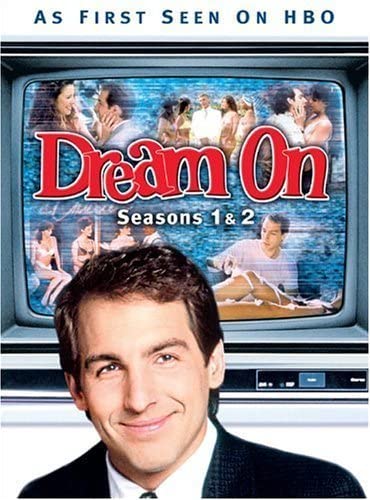
Look at Dream On (1990-96), an early HBO show from the duo who went on to create Friends. Dream On made it to the UK on ‘edgy’ Channel 4 where I saw a distinctive format point. Okay, there were two. The first was a slightly shameful and pragmatic one: female nudity. (Discuss.) Being a cable show, it didn’t have to play by the rules of NBC and CBS. Although perhaps we could concede the point that this was an attempt to make the show more ‘adult’ as it also made use of profanity. This was to establish that it was different from the goofy mainstream fair on network television. This wasn’t The Cosby Show. This was about a divorcee who could never compete with his ex-wife’s new husband.

In a way, that ‘adult’ theme is a counterpoint to the stylistic format which is clips of old black and white movies that punctuate the narrative. That's the second distinctive format point. This is baked into the opening titles where we see the protagonist dumped in front of the TV as a child. He clearly drinks it all in. The implication is that the stuff we watched as kids really affects the way we think as adults.

The Lesson of Dream On

Figure out what your show is really about.

And then work out the best way of telling that story, or showing those characters or capturing that mood. You probably don’t need to change much to make it feel distinctive and original and it will appear you have reinvented the sitcom. In fact, you probably shouldn't. Innovation is normally what went before but with one single change, or extra ingredient.

Not everyone is going to thank you for doing this. Or tune in, stream, download or whatever people do now. At the time lot of people didn’t like The Royle Family, which they thought was slow and boring. I remember watching a Royle Family Christmas Special with my parents one year. They were baffled by it and couldn’t understand why it was billed as a comedy. Given it ended with the dad (Ricky Tomlinson) crying his eyes out in the bathroom, I could see their point.

So maybe it’s for the best that Victoria Wood didn’t give us the low-key, less-is-more dinnerladies. But knowing her, she probably would have made it work.

Getting Your Story Straight

If you want to build your own sitcom, you really need to get the story right and know what the show is about. That is emphasis of my sitcom video course, Writing Your Sitcom. Spec scripts are almost always deficient in the storytelling, and if you can get that right, your script really will stand out from the huge pile of other scripts. Why not find out more about the course here?


Tuesday, 12 January 2021

What Even Is a Sitcom These Days?

If you’re trying to write a sitcom, or get into sitcom writing, it’s worth taking a step back to ask what you’re getting into. What even is a sitcom?

In the days of Cheers and Terry and June, it was pretty obvious. These days it’s harder to know as the genre has morphed in these times of multi-channel, multi-platform, second screening and binge-watching boxed sets which also mash up comedy and drama.

If you want to know more about the difference between a sitcom and comedy drama, because you're trying to write a comedy drama, or can't decide if what you're writing is a sitcom, or a comedy drama, I made a video that should help, and you can watch for free via here.

There's A Lot Of It About

There is a lot of comedy drama about. But sitcoms have not changed as much as you might think.

The word ‘sitcom’ might sound meaningless or dated, especially if you’re watching all kinds of genre-busting content from all over the world through streaming services. But, despite what the media suggests, we don’t live in a world dominated by Netflix.

Not everyone has Netflix
In fact, the majority of households don’t have Netflix. Google the stats. It's true.

And those that who do stump up for Netflix, Prime or Disney+ often get overwhelmed or can’t find anything they fancy so go back to watching Frasier or The Vicar of Dibley reruns on the TV or iPlayer.

Or they binge watch Friends on Netflix.

Before Christmas, BBC1 slot repeated an old episode of traditional studio sitcom, Blackadder. On a Friday night. That's prime TV real estate given over to old fashioned studio sitcom.

So what’s the lesson here?

The vast majority of people still like good old fashioned sitcoms.

Friends, by itself, is a multi-billion-dollar franchise that still generates a ton of money. People are still watching it and rewatching it. Teens are discovering it. A few of the references are dated, and we cringe now and then, but it’s rock-solid wall-to-wall never-fails funny. The same goes for Seinfeld and Frasier.

In the UK, for years, the best performing sitcom on BBC2 that garners more viewers than every new sitcom by half a million viewer is Dad’s Army. It also get more viewers than any new comedy on Channel 4, with the possible exception of The Windsors. In fact, switch over to Channel 4’s network of channels and you’re never far away from an episode of Father Ted, or Black Books. And many people have seen those episodes many, many times over.

Most of these shows are traditional studio sitcoms, being shot on a few sets in front of an audience, with a small group of familiar characters. The time frame is normally 24-28 hours. And there’s normally one clear main story and a couple of subplots, all with a beginning, a middle and an end. Friends makes that very obvious, where each episode is called ‘The one with…’

And these sitcoms are still being made.

After Friends came How I Met Your Mother, which did pretty well. Then there was the massive studio sitcom hit Big Bang Theory. In the UK, we had IT Crowd, Miranda (in which I was involved), Not Going Out, Mrs Brown’s Boys and Kate and Koji. These big traditional shows, when you get them right, can do really really well. And channel controllers want that.

Now that sign says apple sauce...
The Awful Sounds of Human Laughter

But who wants to shoot a show in a studio these days? With that awful confected sound of human laughter? Let’s not get into canned laughter right now. For now let’s note the big secret hiding in plain sight:

Single-camera non-studio shows are basically the same in format.

You mostly have a small group of characters, with a main plot with a beginning, a middle and an end over the course of 24-48 hours.

This is how most episodes of single camera shows work: The Office, 30 Rock, Arrested Development, The Larry Sanders Show, Parks and Rec, Veep and Modern Family.

They may feel fresh and innovative, and have interesting story techniques and special episodes that entirely take place on a laptop (see Modern Family (right)) but at heart, they’re just good old-fashioned sitcoms.

So what’s the point for those of us in the business of writing and creating sitcoms, and writing scripts?

It’s this: Keep it simple. Trust the format.

These sitcoms, past, recent and present, are not just a tried and tested formula, but a huge part of audience expectation. And, let’s be honest, it just works. That ‘simple’ story, well told, with a beginning, middle and end, is what we are looking for in a sitcom. We deviate from that at our peril.

Hold your nerve.

Writing Your Sitcom

Keeping it simple and holding your nerve is all very well if you know what you're doing. I get it. So if you want to write a sitcom from scratch, or whatever you have been doing before hasn’t been working and you want to start all over again, why not consider my comprehensive Writing Your Sitcom video course. There are twelve clear steps, each with a video and some homework, all contributing to the final product: a sitcom script that you can be proud of. Worth a look? Let me tell you more about it here.

Friday, 8 January 2021

Habits of Highly Effective Writers #7: Planning

Lord Byron wouldn’t have done it. Nor Shelley or Keats. Maybe Wordsworth once he’d calmed down.

I’m talking about planning. It’s not cool. It’s not writerly. It doesn’t feel creative.

But it saves a lot of time, pain and disappointment. And right now, who needs more of that?

Didn't think so.

Granted, 2020 was a lesson in not over-planning. All our best laid plans almost certainly went awry several times over. The old military cliché is also true: no plan survives the first encounter with the enemy. Once the fight starts, it all goes out the window. But you still plan.

Not Scripts. But Yes, Scripts

I’m not talking about planning scripts. Although you should plan scripts. Most of the scripts I read bear all the hallmarks of someone who’s started writing the script before they’d properly planned it out. It’s usually a bunch of characters in search of a plot. Nothing happens for the first ten pages. Then there’s a build up to something happening. It happens. Everyone reacts. It ends.

The problem here was a lack of planning. (That’s something I address in my video course, Writing Your Sitcom.)

In this post, I’m urging you to have a career plan, or at least a plan for the year. Given the hours you have available in any given week to write, or kick start your career, you don’t really have time to waste, do you? So you need to plan.

Think about the year ahead. It’s probably hard to see how your fortunes will change in a year. But it is possible to end the year in a better position than the way you began. And to end the year with slightly better skills. And a few more opportunities.

“Most people overestimate what they can do in one year and underestimate what they can do in ten years.” Bill Gates (among others)

These are wise words. We are impatient and lose heart quickly. And we want quick results. We see instant celebrity through reality shows. We read about obscure authors getting multi-million pound book deals. But most things - and certainly nothing that lasts - happens overnight.

Let's go back to JK Rowling sitting in a cafe writing her first Harry Potter book. It probably took her a year to finish the second half of that first book, send it out and get a dozen rejection letters. Did that feel like progress? But check back in on her five years later: Progress. Ten years? Success. Fifteen years? She's on her way to being a billionaire.

Please. Make a realistic plan for what you can get done in a year. Account for the fact that everything takes longer than you think it will. (This Freakonomics podcast about why things run late might help.)

But make a plan for this month, for this 'term' or season, and this year.

Deadlines

Douglas Adams famously quipped about loving deadlines and the sound they make as they whoosh past. That's funny. It captures the romance of being a writer. But it's not helpful if you're trying to get on and make best use of limited time, pursue a dream and/or make a living.

So here’s one thing I’d urge you to do. Ignore Douglas Adams. Set a script deadline. And stick to it. Write one really good script by that deadline. Just one. You won't have time to do more than one. But finish it. Polish it. Make it good. (If you have a script that needs finishing, improving, tightening or tweak, I've produced a PDF called 7 Things You Can Do To Improve Your Script Right Now.)

Could Do Better

I often encounter aspiring writers who say they entered a script into a competition knowing the script was no good. Are you one of those? Why was the script no good? Clearly, there a decision was never made to make it no good. A decision was never made. That’s the main problem.

So identify a date by which you would like to have a really good script. And work backwards from that date.

You might want to use a competition deadline as a date, which is as good as any. Or, you might want to take a date that has emotional significance. Maybe your mum’s birthday, or something like that. Maybe you know that by 1st September, you’ll have a whole new season of life to worry about so you want your script done by then. It’s up to you. But pick a date. And make a plan. Working backwards.

Accountable

Then tell someone close to you who will hold you to account. Who will help you stick to the date. Who will check up that you're putting the time in. If this matters to you, it will matter to them and they will keep tabs on you, and then give you that disappointed look if you miss that deadline.

Then work backwards. Leave yourself a realistic amount of time for each phase.

Let’s say you have three writing sessions a week, each lasting 90 minutes. That’s four and a half hours of writing a week. That’s okay. You could write a sitcom script in a month. Just about. At a push. Maybe take half a Saturday too. But that’s the actual script. That's almost the easy bit. You'd need a scene by scene outline to write that script in that time.

That scene by scene outline - which plots out what happens in each scene, plus has a few bits of dialogue and jokes in it and could be a few thousand words - will take you another month.

To get that scene by scene outline, you need to have found the right story for your pilot script. That’s another month writing four and a half hours a week of picking and developing the right story.

But you can’t identify the story that’s really going to demonstrate your characters and situation – and your voice – without some serious groundwork about the set-up and their relationships at play. That’s another month. At least. 

You get the idea. This takes time. A lot of time. It would just happen. You need a plan.

And most people underestimate how long scripts take.

Your Script

That script you want to write looks beguilingly easy to produce. Scripts are, in fact, fairly quick to type. A sitcom script is about thirty pages. That’s about five thousands words. You could type that in a few hours. Maybe faster. Opening a file and typing doesn’t require any special technical ability or qualifications. You just type. There’s obviously much more to it, but people often don’t realise how much.

Here’s where people make the crucial mistake:

If you’re finding it hard to write a script, that’s normal. I find it hard and I've been doing it for twenty years. I've written or co-written 150+ half hour comedy narrative scripts. It's still hard. But not impossible.

If you’re finding writing your script impossible, you probably haven’t planned it right.

There’s a little trick for that: Make a plan. Plan your script. Plan each scene. Break it down in chunks.

But you need time to do all this. It needs to be built into your plan. A good script takes plenty of time and doesn’t just happen. A few bursts of energy and a couple of inspired late nights are unlikely to produce the goods.

It’s like assuming you can run a marathon fasting than other people by sprinting at the end. It’s just a non-starter as plans go. In fact, it’s not a plan. 

So make a plan. Tell someone. And do your best to stick to it.

One More Thing

If you’d like help doing that, I’d like to recommend my video course, Writing Your Sitcom which really emphasises doing the groundwork. And doing it in the right way. So that writing that script is as painless as possible. The course walks you through the writing process in 12 steps – and will work for comedy drama as well as out-and-out sitcoms. 

You might be able to get the course done in 12 weeks, although it will probably take longer unless you’ve got serious time to throw at this. But build the lessons and sessions into your plan. If you start now, you might have a script you are proud of by the end of the Spring. How about that?

Does that sound like a plan?

The result is a script you can be proud of. That's the aim of the course: to help you write your best sitcom script. After all, sho’s got time to send out half-baked scripts that even you don’t think is any good? It’s just a colossal waste of time. And that’s the one thing we can’t get back: time.

There also monthly Zoom chats where you can ask me anything and we can talk about how it’s going, so you’re not doing this all on your own. In fact, if you’ll give me a few minutes, I can tell you about the course here: